
TOLERANCES & CORRUPTIONS
BOSS CORRUPTIONS
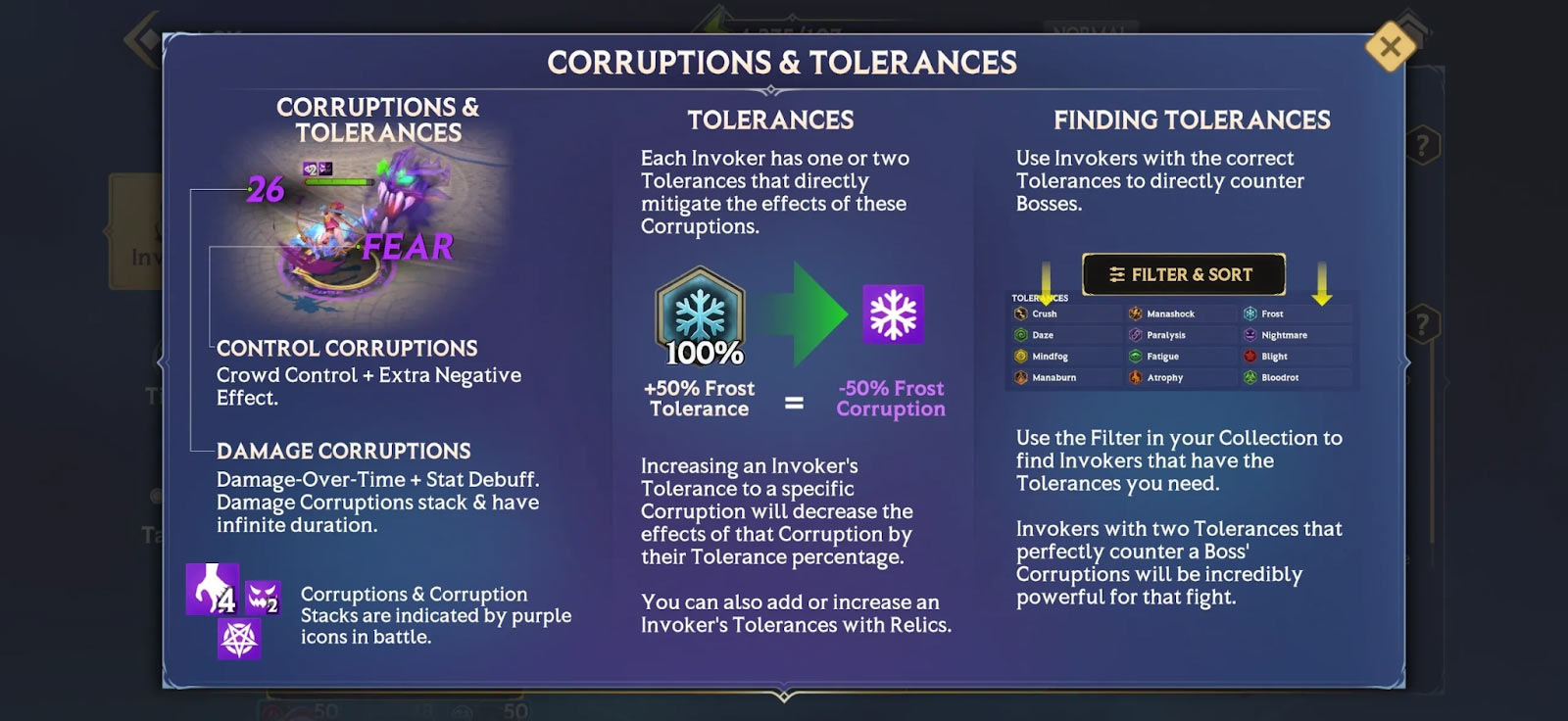
Each Boss has two different Corruptions – one Damage Corruption and one Control Corruption.
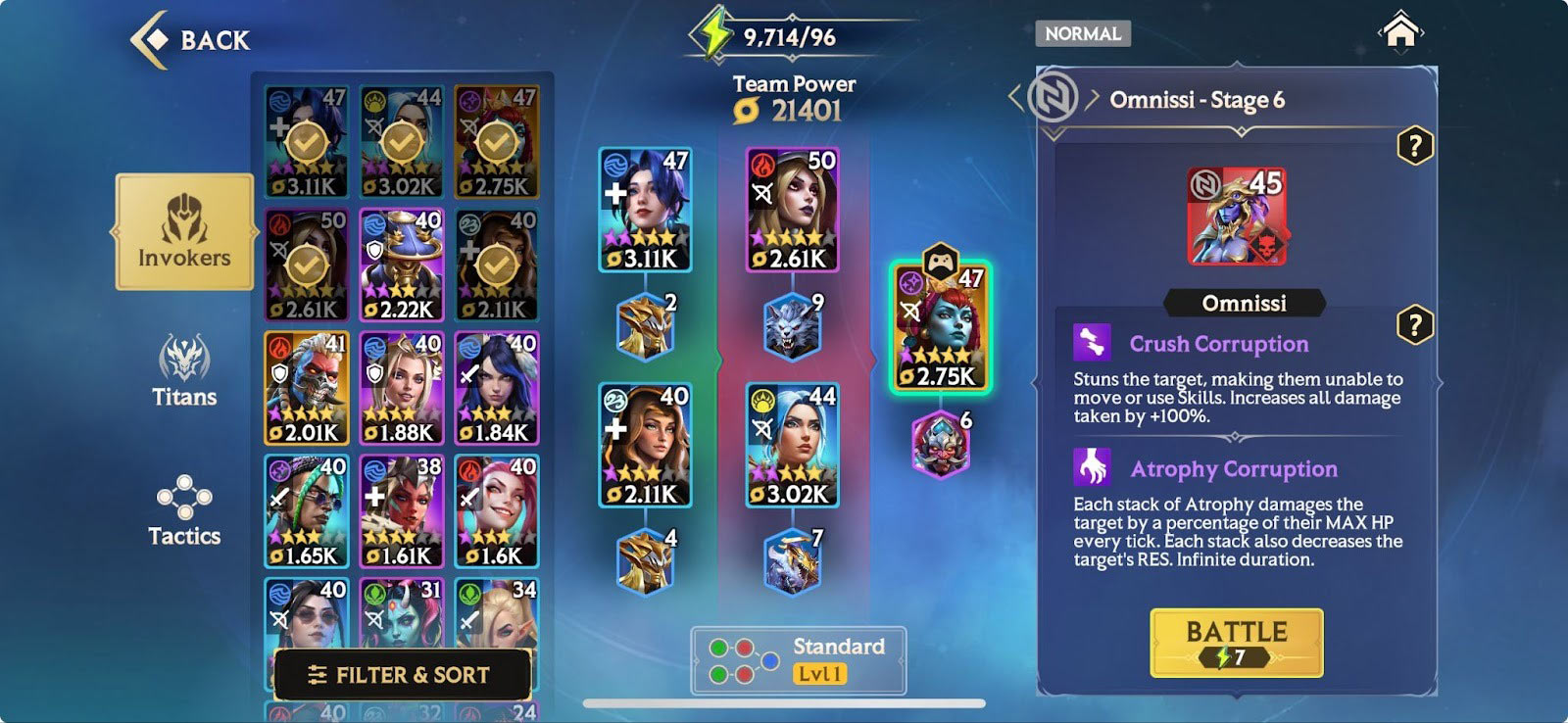
Damage Corruptions:
Bosses cast Stacks of Damage Corruptions during battle. Each Stack of a Damage Corruption deals Damage-over-Time to the target Invoker (such as dealing 5% of their MAX HP every 10 seconds), and comes with extra effects that hinder your team.
Each Stack of Damage Corruptions cannot be purged and have infinite duration – they will continuously damage your Invokers throughout the battle. Each Stack will increase the amount of damage the target will take every tick.
Bosses also deal additional damage with their regular attacks as direct Corruption Damage. Unlike regular damage that is mitigated by the Invoker's DEF, Corruption Damage is mitigated and decreased by the Invoker's Tolerance percentage. Direct Corruption damage will be displayed in the Boss’ Skill description.
Control Corruptions:
Control Corruptions are primarily crowd-control effects. When cast, they stun the target for a significant period of time.
Each Control Corruption will also apply an additional effect – usually an instant effect either when the Corruption first hits your Invoker, or when it expires.
 TOLERANCES
Tolerances directly mitigate the effects of these Corruptions.
For Control Corruptions, this means directly decreasing the duration of the stun by the Invoker's Tolerance percentage. A 10-second stun from Frost Corruption will become a 5-second stun if an Invoker has 50% Frost Tolerance.
Any extra effects from Control Corruptions are mitigated in different ways, depending on the effect.
For Damage Corruptions, Tolerances will directly decrease the damage taken from the Corruption.
Each Invoker has one or two innate Tolerances, depending on their Rarity:
Common, Uncommon, and Rare Invokers each have one Tolerance.
Epic and Legendary Invokers have two Tolerances.
Invokers can gain Tolerance to other Corruptions through other means, such as Tolerance Relic Sets.
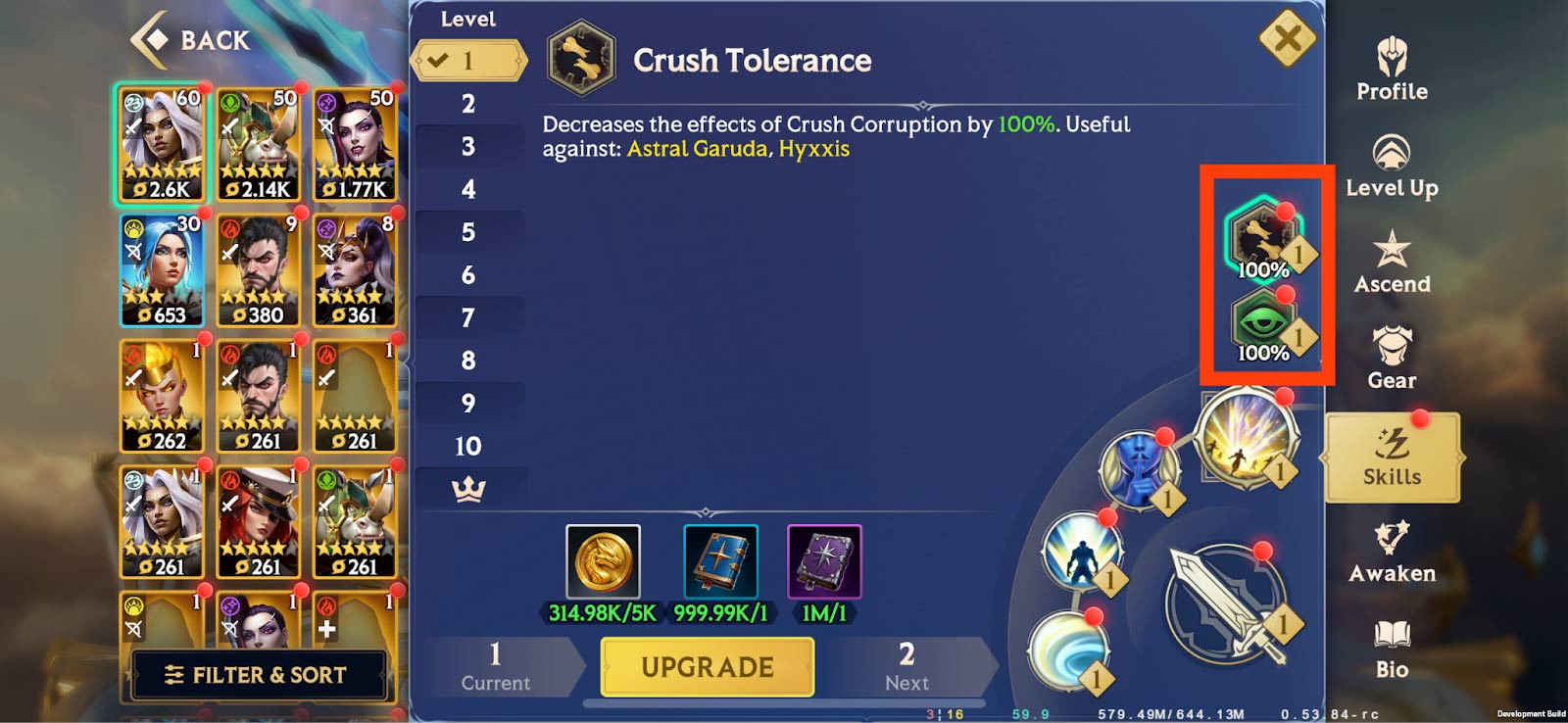
You can upgrade each Tolerance just like a regular Skill – using Codexes and Gold.
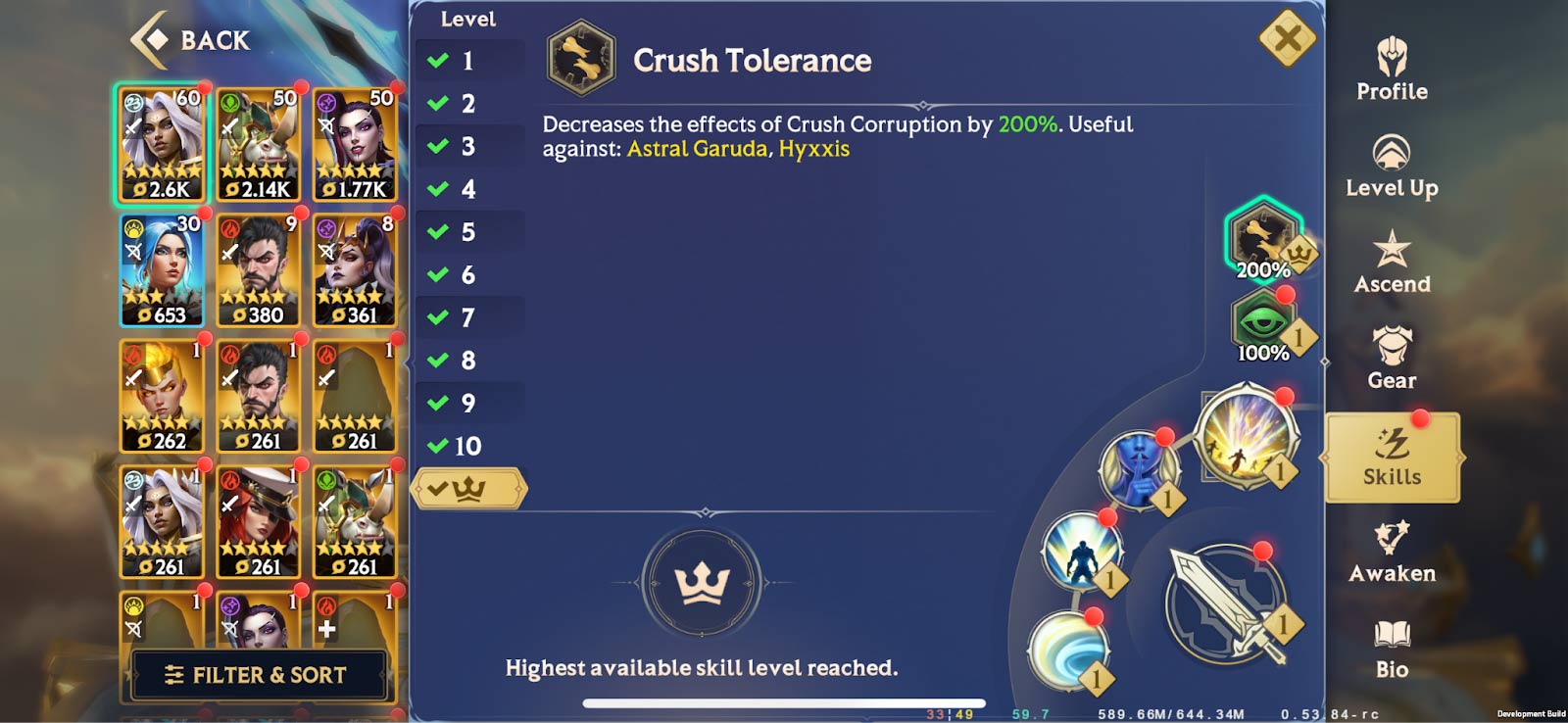
Depending on their Rarity, an Invoker's Tolerance will start at a different percentage.
Common, Uncommon, Rare, and Epic Invokers have Tolerances that start at 50%.
Legendary Invokers have Tolerances that start at 100%.
Every time you upgrade a Tolerance, it gains +10%. This means that, when maxed out and fully upgraded:
Common, Uncommon, Rare, and Epic Invokers will have 150% Tolerance.
Legendary Invokers will have two tolerances each at 200%.
Matching Corruptions & Tolerances

Matching Invokers with the right Tolerance to counter the Boss’ Corruptions is a huge part of the strategy and puzzle to overcoming some of the toughest Boss battles.
Each Boss has a different set of Corruptions that you must look to counter.
While Common, Uncommon, and Rare only have a single Tolerance, making sure it fits the Boss you're fighting can go a long way to winning the battle.
Epics and Legendaries have two Tolerances, and it's possible to find a double-match – two Tolerances that perfectly counter the exact Corruptions a Boss has.
This makes Epics and Legendaries doubly strong in the right scenario – and more versatile and suitable for more Boss fights than Rare Invokers.
Boss Corruptions – Bonuses & Penalties
Depending on which Stage you fight a Boss on, your team will gain either Tolerance Bonuses or Tolerance Penalties.
When fighting a Boss on Stage 1, each Invoker in your team will gain a +75% Tolerance Bonus, which is directly added to their existing Tolerance Stat.
That means a Rare Invoker with 50% Tolerance to the Boss’ Corruption will have 125% Tolerance in-battle, completely cancelling out the Boss’ Corruptions.
This is added to all Invokers, so even Invokers without a matching Tolerance (so 0% Tolerance to the Boss' specific Corruptions otherwise) will have 75% Tolerance. This means 10-second Control Corruption Stuns become 2.5 seconds, and Damage Corruptions only deal 25% damage.
On the other side, at Stage 20, each Invoker will receive a -100% Tolerance Penalty – decreasing their Tolerance to the Boss’Corruptions.
This means even if a Rare Invokers has fully upgraded their Tolerance to 150%, when fighting a Boss on Stage 20, they will in effect only have 50% Tolerance – and only be able to reduce the effects of a Corruption by 50%.
Tolerance penalties will not go below 0% – so if you take an un-upgraded Rare Invoker into a Stage 20 Boss fight (where their 50% Tolerance will see a -100% penalty), they won't drop to -50%.
Here's the full breakdown of the Tolerance Bonuses or Penalties by Boss Stage:
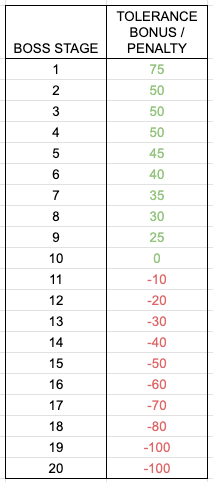
This means that, without Relics, only Legendaries are able to gain 100% Tolerance through upgrading their innate Tolerances alone against Bosses on Stage 20 – though all Invokers can gain extra Tolerance through Relics.
CORRUPTION & TOLERANCE LIST
There are many different Corruptions in the game, and each is affected in a different way by their respective Tolerance. Here's how they work:
CONTROL CORRUPTIONS
Crush Corruption

Stuns the target, making them unable to move or use Skills. Increases all damage taken by +100%.
Crush Tolerance
Not only does Crush Corruption stun the target, taking them out of the battle for a long time, but it also causes the target to take double damage, from all sources of damage - whether that's a direct hit from a Boss, or damage from a Burn or other debuff.
Increasing an Invoker's Crush Tolerance decreases the duration of Crush Corruption and its effects by the Tolerance percentage, reducing the time you are stunned and take double damage. Increasing Crush Tolerance will significantly reduce the amount of damage an Invoker takes throughout a battle with a Boss with Crush Corruption.
The following Bosses have Crush Corruption: Hyxxis, Omnissi (Astral), Althar
 Manashock Corruption

Stuns the target, making them unable to move or use Skills. Decreases all Ultimate and Titan Mana gained by 50%.
Manashock Tolerance
Manashock Corruption stuns the target, while also decreasing the amount of Ultimate and Titan Mana the target gains from any source.
This can massively decrease the effectiveness of a Support Invoker whose job it is to generate Mana for their team, as even if they have high Manashock Tolerance themselves, their power is greatly decreased if their teammates only receive 50% of the Mana they generate.
Increasing an Invoker's Manashock Tolerance decreases the duration of Manashock and its effects by the Invoker's Tolerance percentage, reducing the duration of the stun and decreasing the Mana gain penalty.
The following Bosses have Manashock Corruption: Koltmos, Omnissi (Dark), Sakiel
Frost Corruption

Stuns the target, making them unable to move or use Skills. Stops all Skill Cooldowns on the target.
Frost Tolerance
Frost Corruption stuns the target, while also freezing all of the target's cooldowns for its duration.
With cooldowns on pause, your Invokers can effectively be locked out of using their Active and Ultimate Skills if they get hit with Frost Corruption at a bad time. This means no heals, no buffs or debuffs - restricted to Combo Attacks alone.
Increasing an Invoker's Frost Tolerance decreases the duration of the Frost Corruption by the Invoker's Tolerance percentage, which means a shorter stun, and less time with frozen Cooldowns.
The following Bosses have Frost Corruption: Yskara, Omnissi (Water)
Daze Corruption

Stuns the target, making them unable to move or use Skills. Instantly purges 2 buffs from the target when Daze Corruption first lands.
Daze Tolerance
Daze Corruption instantly purges 2 buffs from the target as soon as the Corruption lands, then stuns them for the duration.
Bosses with Daze Corruption can become incredibly hard to navigate due to being unable to guarantee which Buffs your team will have up at any time. Whenever they get hit with Daze, they'll lose 2 of their buffs straight away.
Increasing an Invoker's Daze Tolerance will decrease the duration of the Daze's stun by the Invoker's Tolerance percentage. And at 100% Daze Tolerance, the Buff purge will also be blocked.
The following Bosses have Daze Corruption: Ulgorim, Galvos, Omnissi (Fire)
Paralysis Corruption

Stuns the target, making them unable to move or use Skills. Puts one of the target's Skills on a 30s Cooldown, at random, after the Paralysis Corruption expires.
Paralysis Corruption
Paralysis Corruption stuns the target for its duration. Then, when it expires, it puts a random Skill of the target's on a 30-second cooldown.
Paralysis can throw your plans out of the window. You can often recover from a long stun, or other crowd-control debuff, by immediately using a powerful heal after the debuff expires. But Paralysis can stop that plan in its tracks if it puts the skill you were waiting to use on a huge 30-second cooldown.
Increasing an Invoker's Paralysis Tolerance will decrease the duration of the Paralysis' stun by the Invoker's Tolerance percentage. And at 100% Paralysis Tolerance, the cooldown increase will also be blocked.
The following Bosses have Paralysis Corruption: Omnissi (Earth), Omnissi (Light)
Nightmare Corruption

Causes the target to run uncontrollably. Puts one of the target's Skills on full Cooldown, at random, after the Nightmare Corruption expires.
Nightmare Tolerance
Nightmare Corruption causes the target to run around uncontrollably, during which time they cannot use any Skills, and could run into a trap or deadly enemy attacks. And once the Nightmare Corruption expires, one of the target's Skills will be put on full cooldown.
Increasing an Invoker's Nightmare Tolerance will decrease the duration of the Nightmare's effects by the Invoker's Tolerance percentage, allowing you to regain control sooner. And at 100% Tolerance, your Skills will not be affected by the cooldown increase.
The following Bosses have Nightmare Corruption: Pentiax, Omnissi (Wind)
DAMAGE CORRUPTIONS
Mindfog Corruption

Each stack of Mindfog damages the target by a percentage of their MAX HP every tick. Each stack also decreases the target's ACC. Infinite duration.
Mindfog Tolerance
Mindfog Corruption is a damage-over-time effect that damages the recipient by a percentage of their MAX HP every tick. It also decreases the target's ACC by a certain percentage. Mindfog Corruption has an infinite duration and cannot be removed. Mindfog Corruption stacks additively, so each stack of Mindfog directly increases the damage per tick and the ACC reduction.
Bosses with Mindfog Corruption also deal direct Mindfog damage from their Skills, in addition to their regular damage. Direct Mindfog damage ignores the target's DEF stat, and can only be decreased by the target's Mindfog Tolerance.
Increasing an Invoker's Mindfog Tolerance will decrease all Mindfog damage by the Invoker's Tolerance percentage, along with decreasing the effects of the ACC reduction.
The following Bosses have Mindfog Corruption: Pentiax
Fatigue Corruption

Each stack of Fatigue damages the target by a percentage of their MAX HP every tick. Each stack also decreases the target's Move SPD. Infinite duration.
Fatigue Tolerance
Fatigue Corruption is a damage-over-time effect that damages the recipient by a percentage of their MAX HP every tick. It also decreases the target's Move SPD by a certain percentage. Fatigue Corruption has an infinite duration and cannot be removed. Fatigue Corruption stacks additively, so each stack of Fatigue directly increases the damage per tick along with the Move SPD reduction.
Bosses with Fatigue Corruption also deal direct Fatigue damage from their Skills, in addition to their regular damage. Direct Fatigue damage ignores the target's DEF stat, and can only be decreased by the target's Fatigue Tolerance.
Increasing an Invoker's Fatigue Tolerance will decrease all Fatigue damage by the Invoker's Tolerance percentage, along with decreasing the effects of the Move SPD reduction.
The following Bosses have Fatigue Corruption: Yskara, Althar
Blight Corruption

Each stack of Blight damages the target by a percentage of their MAX HP every tick. Each stack also decreases the target's Skill Recovery. Infinite duration.
Blight Tolerance
Blight Corruption is a damage-over-time effect that damages the recipient by a percentage of their MAX HP every tick. It also decreases the target's Skill Recovery by a certain percentage. Blight Corruption has an infinite duration and cannot be removed. Blight Corruption stacks additively, so each stack of Blight directly increases the damage per tick along with the Skill Recovery reduction.
Bosses with Blight Corruption also deal direct Blight damage from their Skills, in addition to their regular damage. Direct Blight damage ignores the target's DEF stat, and can only be decreased by the target's Blight Tolerance.
Increasing an Invoker's Blight Tolerance will decrease all Blight damage by the Invoker's Tolerance percentage, along with decreasing the effects of the Skill Recovery reduction.
The following Bosses have Blight Corruption: Ulgorim, Omnissi (Light)
Manaburn Corruption

Each stack of Manaburn damages the target by a percentage of their MAX HP every tick. Each stack also decreases the target's Mana Gen. Infinite duration.
Manaburn Tolerance
Manaburn Corruption is a damage-over-time effect that damages the recipient by a percentage of their MAX HP every tick. It also decreases the target's Mana Gen by a certain percentage. Manaburn Corruption has an infinite duration and cannot be removed. Manaburn Corruption stacks additively, so each stack of Manaburn directly increases the damage per tick along with the Mana Gen reduction.
Bosses with Manaburn Corruption also deal direct Manaburn damage from their Skills, in addition to their regular damage. Direct Manaburn damage ignores the target's DEF stat, and can only be decreased by the target's Manaburn Tolerance.
Increasing an Invoker's Manaburn Tolerance will decrease all Manaburn damage by the Invoker's Tolerance percentage, along with decreasing the effects of the Mana Gen reduction.
The following Bosses have Manaburn Corruption: Hyxxis, Omnissi (Fire), Omnissi (Dark)
Atrophy Corruption

Each stack of Atrophy damages the target by a percentage of their MAX HP every tick. Each stack also decreases the target's RES. Infinite duration.
Atrophy Tolerance
Atrophy Corruption is a damage-over-time effect that damages the recipient by a percentage of their MAX HP every tick. It also decreases the target's RES by a certain percentage. Atrophy Corruption has an infinite duration and cannot be removed. Atrophy Corruption stacks additively, so each stack of Atrophy directly increases the damage per tick along with the RES reduction.
Bosses with Atrophy Corruption also deal direct Atrophy damage from their Skills, in addition to their regular damage. Direct Atrophy damage ignores the target's DEF stat, and can only be decreased by the target's Atrophy Tolerance.
Increasing an Invoker's Atrophy Tolerance will decrease all Atrophy damage by the Invoker's Tolerance percentage, along with decreasing the effects of the RES reduction.
The following Bosses have Atrophy Corruption: Galvos, Omnissi (Astral), Omnissi (Water)
Bloodrot Corruption

Each stack of Bloodrot damages the target by a percentage of their MAX HP every tick. Each stack also decreases the size of all heals the target receives. Infinite duration.
Bloodrot Tolerance
Bloodrot Corruption is a damage-over-time effect that damages the recipient by a percentage of their MAX HP every tick. It also decreases the size of all heals the target receives by a certain percentage. Bloodrot Corruption has an infinite duration and cannot be removed. Bloodrot Corruption stacks additively, so each stack of Bloodrot directly increases the damage per tick along with the Heal Size reduction.
Bosses with Bloodrot Corruption also deal direct Bloodrot damage from their Skills, in addition to their regular damage. Direct Bloodrot damage ignores the target's DEF stat, and can only be decreased by the target's Bloodrot Tolerance.
Increasing an Invoker's Bloodrot Tolerance will decrease all Bloodrot damage by the Invoker's Tolerance percentage, along with decreasing the effects of the Heal Size reduction.
The following Bosses have Bloodrot Corruption: Koltmos, Omnissi (Earth), Sakiel